Open Source Ticketing System: 9 Options Compared for 2026
On this page
An open source ticketing system is help desk software whose source code is published under an open license, so you can download it, run it on your own server, read the code and change it. The most common choices in 2026 are osTicket, Zammad, FreeScout, GLPI, Request Tracker, Znuny, UVdesk, Frappe Helpdesk and Chatwoot. The license costs nothing, but hosting, upgrades and security patches become your job.
That trade-off is the whole story. Open source is everywhere in software: the Black Duck OSSRA report found open source in 98% of the commercial codebases it audited. The same report found at least one known vulnerability in 87% of them. A self-hosted help desk puts you on the maintenance side of that statistic.
Below you will find what each of the nine projects is good at, a side-by-side table, the costs nobody puts on the download page, and a short checklist for your first install.
What an open source ticketing system actually gives you
A ticketing system turns every incoming request (an email, a form submission, a chat) into a ticket with an owner, a status and a history. If you want the basics first, our guide to the ticketing system concept covers statuses, priorities and assignment in detail.
"Open source" adds something specific on top. According to the Open Source Definition maintained by the Open Source Initiative, open source "doesn't just mean access to the source code". The license must allow free redistribution, must include the source code, and must allow modifications and derived works. That is what separates open source from freeware.
Open source vs freeware ticketing systems
People searching for a freeware ticketing system often mean the same thing, but the two are different:
- Freeware is free to use, but the code is usually closed. If the vendor stops updating it or changes the terms, you have no way to fix it yourself.
- Open source gives you the code. If the original maintainers disappear, you or someone else can fork it and keep going. That actually happened: Znuny exists because the OTRS Community Edition reached end of life (more on that below).
The license changes what you can do
Most open source ticketing software uses one of four license families:
| License | Used by | What it means in practice |
|---|---|---|
| GPL-2.0 / GPL-3.0 | osTicket, Request Tracker (GPL-2.0); GLPI, Znuny (GPL-3.0) | Free to run and modify. If you distribute a modified version, you share the source. |
| AGPL-3.0 | Zammad, FreeScout, Frappe Helpdesk | Like GPL, plus a network clause: if users interact with your modified version over a network, they can get your source. |
| MIT (with an enterprise folder) | Chatwoot | Very permissive for the core; code in the enterprise/ directory has its own license. |
| OSL-3.0 | UVdesk | Copyleft license that also treats network use as distribution. |
The AGPL point matters more than people think. The AGPL v3 text says it is "specifically designed to ensure cooperation with the community in the case of network server software". A help desk is network server software by definition. For a team that just runs the code internally, this rarely changes anything. For an agency that customizes a help desk and resells it to clients, it changes a lot.
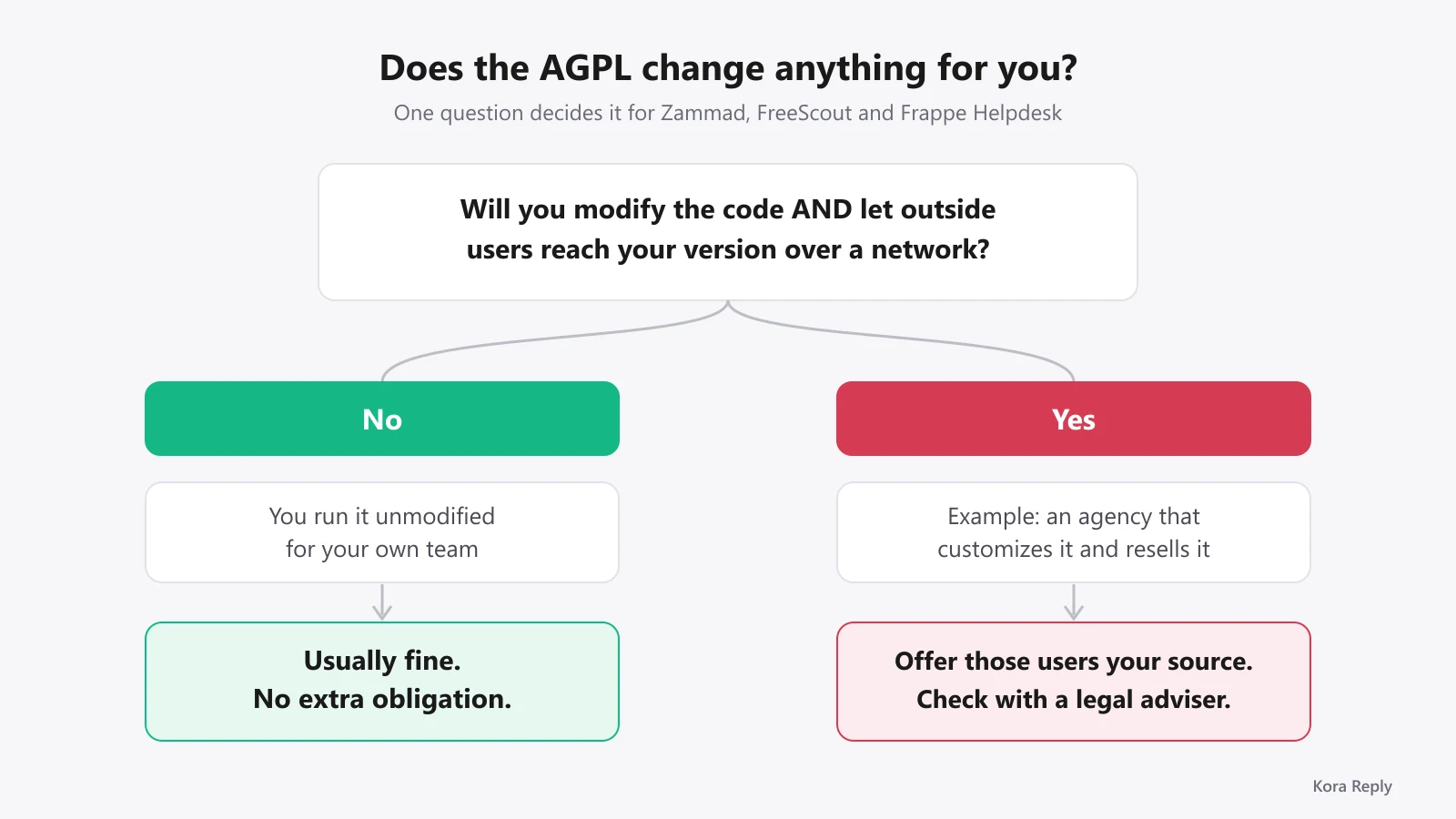
Key takeaway: "Free" describes the license, not the project. Before you shortlist anything, write down the license and ask one question: do we plan to modify this and let outside users touch it?
9 open source ticketing systems worth a look in 2026
Every open source ticketing system below publishes its code on GitHub. We checked each repository's license and activity in October 2026. We left out projects whose repositories are archived, with one cautionary example at the end.
1. osTicket
The long-time default for small teams. Its GitHub README describes it as "a widely-used open source support ticket system" that merges requests from email, phone and web forms into one multi-user web interface. License: GPL-2.0.
The installation guide asks for a standard web server, PHP 8.2 to 8.4 and MySQL 5.5 or newer, which means it runs on most ordinary hosting. If you would rather not host it, the vendor's editions page lists a cloud version starting at $12 per agent per month.
Good for: email and web-form support with simple workflows. Watch out for: the interface feels dated next to newer tools.
2. Zammad
Zammad calls itself "a web-based, open source user support/ticketing solution" that you can install on your own servers for free. Its repository describes support across email, chat, telephone and social media, and the hosted Professional plan adds a knowledge base. License: AGPL-3.0.
It is also the heaviest to run. The hardware prerequisites say a minimal deployment should not go below 2 CPU cores and 6 GB of RAM, plus 4 GB more if Elasticsearch runs on the same server. The company also sells hosted plans: Starter v2 is listed at 7 € to 9 € per agent per month depending on billing period and caps at 5 agents.
Good for: teams that want a modern, all-in-one open source help desk. Watch out for: server sizing and search engine maintenance.
3. FreeScout
A lightweight shared-inbox help desk built on PHP and Laravel. The repository pitches it as a "Free Self-Hosted Zendesk & Help Scout Alternative". License: AGPL-3.0.
The core is free, but many features people expect (for example extra channels or advanced workflows) come as paid modules, sold as "lifetime licenses for a single FreeScout instance". The installation guide supports PHP 7.x and 8.x but warns against PHP 8.1 specifically.
Good for: small teams that live in email and want something that feels like a shared inbox. Watch out for: budget for the modules you will actually need.
4. Chatwoot
A chat-first customer engagement platform. Its repository lists live chat, email, Facebook, Instagram, Twitter and WhatsApp in one inbox. Its license file states that everything outside the enterprise/ directory is available under the MIT Expat license.
Chatwoot also runs a cloud service. Its pricing page lists a free Hacker plan for up to 2 agents and 500 conversations per month, and the same page marks the help center as not included in that plan.
Good for: teams whose customers mostly reach out by chat. Watch out for: the split between MIT core and enterprise features.
5. GLPI
GLPI is an IT service management suite first and a help desk second. The project site lists ticket management next to asset management, a CMDB (configuration management database, a record of every device and system you support) and financial tracking. License: GPL-3.0 (repository).
Good for: an open source IT ticketing system where tickets must link to laptops, licenses and servers. Watch out for: it is overkill for customer support.
6. Request Tracker (RT)
Built by Best Practical and written in Perl, RT describes itself on GitHub as "an enterprise-grade issue tracking system". License: GPL-2.0. The vendor's product page introduces RT 6 as the next generation of its open source platform.
Good for: operations, security and IT teams that need flexible queues and auditing. Watch out for: Perl skills help a lot when you customize it.
7. Znuny
Znuny is the community continuation of OTRS. Its repository explains that it continues the OTRS Community Edition 6.0.30, "which was declared end of life (EOL) at the end of December 2020". License: GPL-3.0.
Good for: teams already running OTRS, or teams that want ITIL-style processes. Watch out for: a steeper admin learning curve than osTicket or FreeScout.
8. UVdesk Community
A PHP and Symfony help desk. The repository describes "a comprehensive ticketing support system designed for everyone". License: OSL-3.0.
Good for: e-commerce teams comfortable with the Symfony framework. Watch out for: OSL-3.0 is less familiar to legal teams than GPL.
9. Frappe Helpdesk
Built on the Frappe framework (the same one behind ERPNext), this project calls itself "Modern, Streamlined, Free and Open Source Customer Service Software" on GitHub. License: AGPL-3.0.
Its product page says it does not charge per agent and recommends hosting on Frappe Cloud.
Good for: companies that already run ERPNext or other Frappe apps. Watch out for: you inherit the Frappe stack (Python plus Vue) along with it.
A cautionary example: Peppermint
Peppermint described itself as "an open source issue management & help desk solution". Its repository was archived by the owner on July 17, 2026 and is now read-only. It still appears on plenty of "best open source help desk" lists. Always check for the archived banner and the last commit date before you invest a weekend in setup.
Open source help desk software compared side by side
This table sums up the nine projects so you can compare each open source ticketing system at a glance. "Hosted option" means the maintainers or their company sell a managed version, which is a useful escape hatch if self-hosting gets painful.
| Project | License | Main stack | Best for | Hosted option from the vendor |
|---|---|---|---|---|
| osTicket | GPL-2.0 | PHP, MySQL | Email and web-form support | Yes, cloud from $12 per agent/month |
| Zammad | AGPL-3.0 | Ruby on Rails, PostgreSQL | All-in-one support with chat and KB | Yes, per-agent plans |
| FreeScout | AGPL-3.0 | PHP (Laravel) | Shared-inbox style email support | No (paid modules instead) |
| Chatwoot | MIT core + enterprise | Ruby on Rails | Chat-first support | Yes, free Hacker plan and paid tiers |
| GLPI | GPL-3.0 | PHP | IT service desk with assets and CMDB | Yes, GLPI Network Cloud |
| Request Tracker | GPL-2.0 | Perl | Ops, security and IT queues | Yes, Cloud RT hosted plans |
| Znuny | GPL-3.0 | Perl | OTRS users, ITIL processes | Professional services |
| UVdesk | OSL-3.0 | PHP (Symfony) | E-commerce support | Yes, SaaS from $8 per agent/month (annual) |
| Frappe Helpdesk | AGPL-3.0 | Python, Vue | ERPNext and Frappe users | Yes, Frappe Cloud hosting |
Licenses read from each project's GitHub repository in October 2026. Hosted options from each vendor's own pricing page: GLPI, Request Tracker, UVdesk and Frappe.
Two patterns stand out. First, almost every serious project now sells a hosted edition. That tells you something about how many users eventually decide they do not want to run the server. Second, the "free" tier often has gaps you only find later, like FreeScout's paid modules or the missing help center on Chatwoot's free cloud plan.
Pro tip: If you need a public knowledge base, filter the list on that first. Many teams pick a ticketing tool, then discover they need a separate knowledge base tool too, with its own login and its own updates.
The real cost of a self-hosted ticketing system
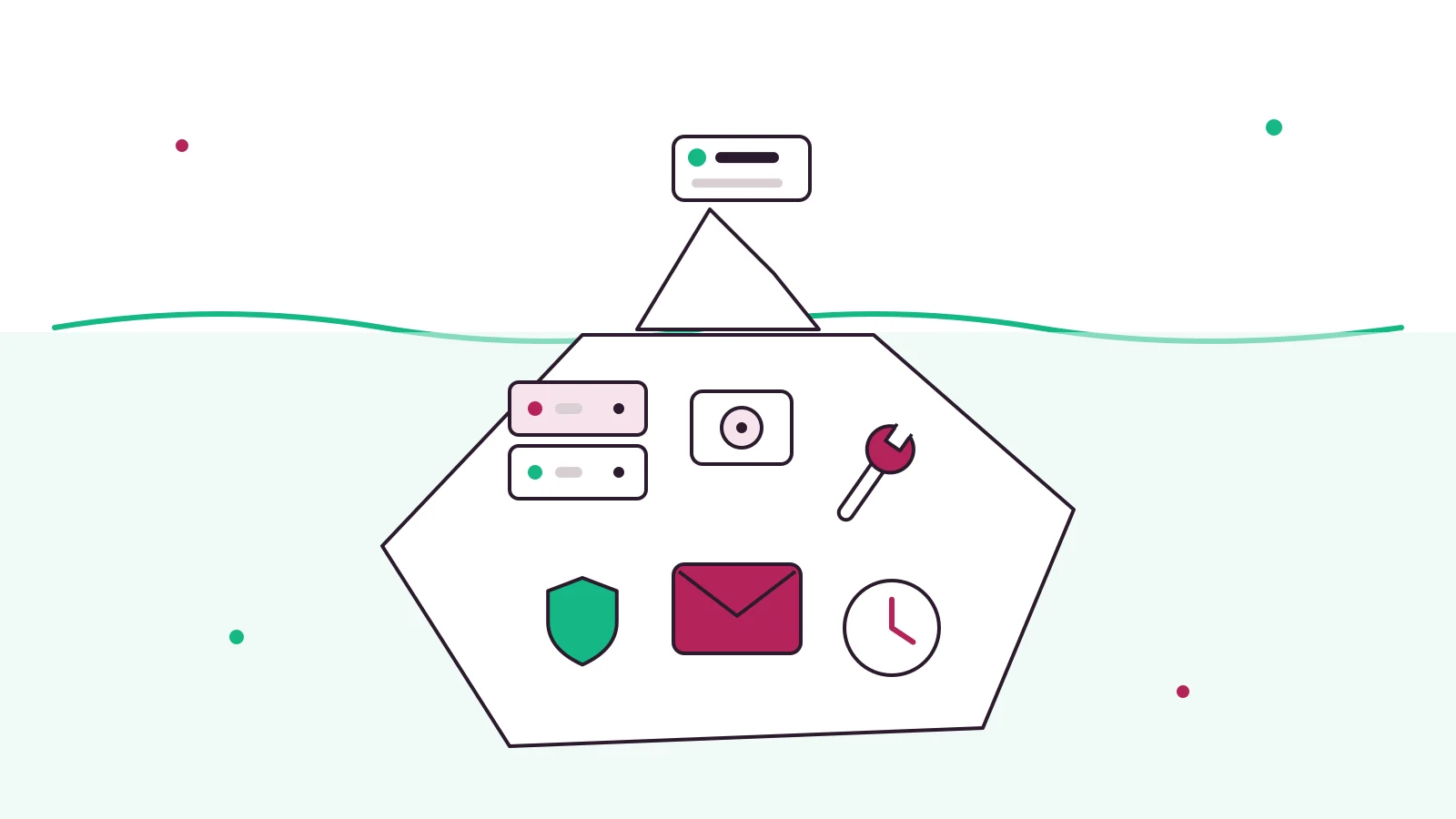
The license is the tip of the iceberg. Servers, backups, upgrades and security patches sit below the waterline.
A self hosted ticketing system moves cost from a monthly invoice to your team's time. Here is where it goes:
- Server. Light PHP tools like osTicket or FreeScout run on modest hosting. Zammad's documented minimum is 2 CPU cores and 6 GB of RAM before you add Elasticsearch, and its example setup for up to 40 agents uses 6 CPU cores.
- Email deliverability. Your help desk sends replies from your domain. You need working SPF, DKIM and DMARC records, or your answers land in spam.
- Upgrades. Each major version can bring database migrations. Skipping upgrades is how a help desk ends up years behind.
- Security. The OSSRA research found that more than 9 out of 10 audited codebases contain components that are significantly outdated or abandoned. A help desk holds customer names, emails and sometimes order or account data, so an unpatched one is a real liability.
- Backups and restore tests. A backup you have never restored is a hope, not a backup.
- Paid extras. Modules, add-ons or support contracts often appear once you need a feature like SLA tracking or a second channel.
Our honest take: for a team of three to ten people, the license saving rarely survives contact with the calendar. If one person spends four hours a month on updates, backups and email issues, that staff time can easily cost more than a hosted plan for a small team, so run the numbers below before you decide. Self-hosting wins when you have strict data residency rules, an existing ops team, or a need to change the code itself.
Benchmark: Price your own time before you compare. Multiply the hours per month you expect to spend on maintenance by an hourly cost, then put that number next to the per-agent price of a hosted plan.
How to choose: IT service desk, customer support or chat
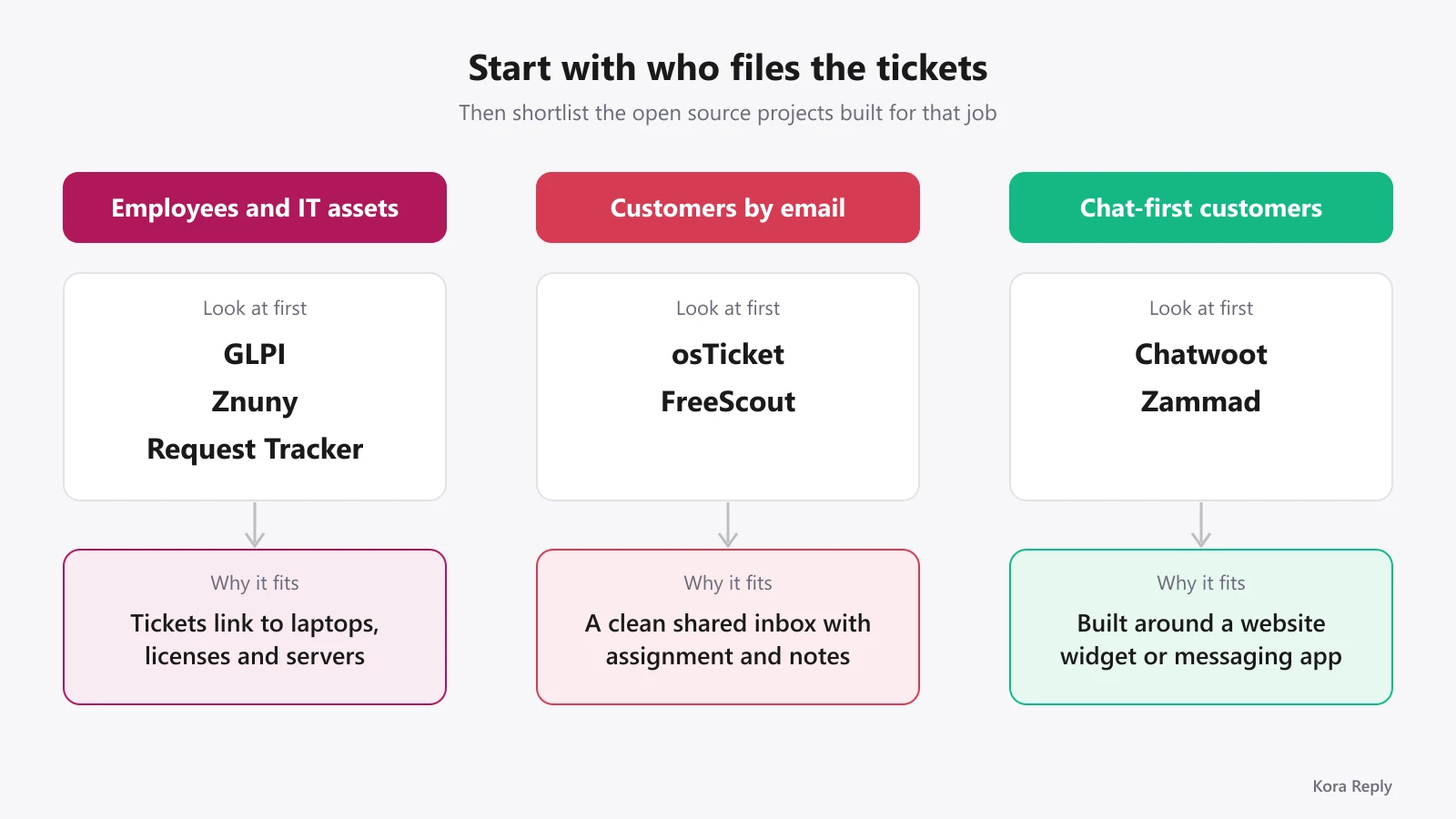
The best open source ticketing system for an IT department is rarely the best one for a support team at an online store. Start with who files the tickets. Not sure which camp you are in? Our explainer on help desk vs service desk breaks down the difference.
For internal IT and an open source service desk
If employees file the tickets and you track laptops, licenses and servers, look at GLPI first, then Znuny or Request Tracker. These tools think in assets, change requests and approval flows. They are also the closest open source answer to commercial ITSM suites. Our page on IT help desk software lists the features that matter most for internal IT.
For customer support over email
If customers email you and you mostly need a clean shared inbox with assignment and notes, osTicket and FreeScout are the simplest. Make sure you can set up email ticketing with your own domain and that saved replies are included, because they save the most time day to day.
For chat-first teams
If most conversations start in a website widget or a messaging app, Chatwoot is built around that. Zammad also covers chat alongside email.
Questions to ask before you shortlist
- Who files tickets: employees, customers, or both?
- Which channels do you need on day one: email, web form, chat, WhatsApp?
- Do you need a public knowledge base, and is it included?
- Do you need response-time targets? Check whether SLA management is in the core or a paid add-on.
- Who on the team owns updates and backups, by name?
If question five has no answer, read the next section before you download anything.
When a hosted help desk is the better deal
Here is the part where we tell you what we make, honestly. Kora Reply is not open source. It is a new hosted help desk for small teams, so there is nothing to install or patch. We built it for teams that like what an open source ticketing system such as FreeScout or osTicket does, but do not want to run a server.
What you get today:
- A shared inbox for email and live chat, with assignment, internal notes and statuses.
- Ticketing with priorities and response-time targets.
- A public knowledge base your customers can search.
- An AI agent that answers from your knowledge base and hands the conversation to a person, with a summary, when it cannot help.
- WhatsApp as an extra channel, currently in beta.
What you do not get: the source code, on-premise hosting, or the deep asset management of GLPI. If those are requirements, pick one of the open source tools above. If you want to compare costs, our pricing page lists the plans, including a free plan, and the alternatives overview shows how hosted tools compare.
Your first install: a practical checklist
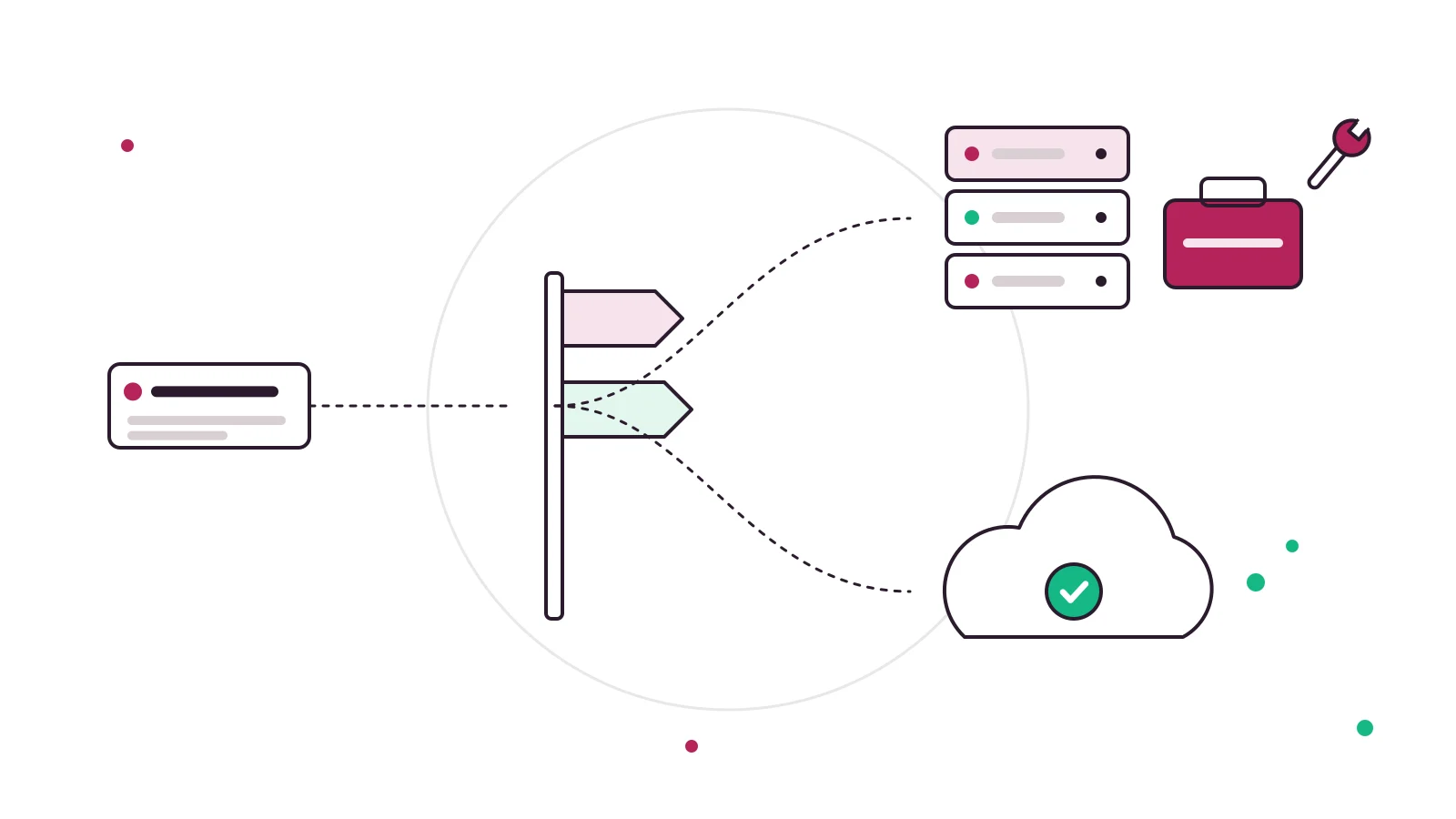
Two routes to the same goal: run the code yourself, or rent it as a service. Decide before you install, not after.
If you have decided to self-host an open source ticketing system, this checklist keeps your first week sane.
Before installation
- Confirm the repository is alive. Look for a commit in the last few months, open issues being answered, and no archived banner.
- Read the license file. Note whether it is GPL, AGPL, MIT or OSL, and record it for your legal or procurement team.
- Size the server from the docs. Use the project's own requirements, like osTicket's PHP and MySQL versions or Zammad's RAM guidance, not a blog post's guess.
During installation
- Use a dedicated subdomain such as
support.yourdomain.com, with HTTPS from day one. - Set up outbound email properly with SPF, DKIM and DMARC, then send test replies to Gmail and Outlook inboxes.
- Turn on automated backups, and store them off the server.
After go-live
- Restore a backup to a test server within the first month.
- Subscribe to the project's security announcements or release feed.
- Write your first ten saved replies. Our free canned response generator can give you a starting set.
- Review in 90 days. Count the hours spent on maintenance. If it is more than you expected, a hosted option is still on the table.
Pro tip: Keep an export path open. Before you commit, check that you can export tickets and contacts in a standard format, so switching tools later is a migration and not a rebuild.
For a wider view beyond open source, see our roundup of the best ticketing tools, our guide to free ticketing systems, and our pick of the best help desk software for small teams.
Frequently asked questions
There is no single winner. osTicket and FreeScout suit small teams that mostly handle email. Zammad suits teams that want email, chat and a knowledge base in one tool. GLPI and Znuny suit IT departments that need asset management or ITIL-style processes. Chatwoot suits chat-first support.
The license is free, but running it is not. You pay for a server, backups, updates and the hours someone spends maintaining it. Some projects also sell paid add-ons, such as FreeScout's lifetime-licensed modules, or hosted plans, such as Zammad's per-agent cloud packages.
Freeware is free to use but usually closed, so you cannot read or change the code. Open source software ships its source code under a license that meets the Open Source Initiative's definition, which allows redistribution, modification and derived works.
Running unmodified AGPL software for your own team is usually fine. The AGPL's extra obligation applies when you modify the software and let other people use it over a network: then you must offer them your modified source. Check with your legal adviser if you plan to customize and resell it.
GLPI is a strong fit because it combines tickets with asset inventory and a CMDB. Znuny, the continuation of the OTRS Community Edition, and Request Tracker are mature choices for process-heavy IT and operations teams.
Yes. osTicket, Zammad, FreeScout, Chatwoot, GLPI, Request Tracker, UVdesk, Znuny and Frappe Helpdesk all publish their code on GitHub. Check the license, the date of the last commit and whether the repository is archived before you commit to one.
If nobody on the team wants to own server updates, backups and security patches, a hosted help desk is usually cheaper in total. The license saving rarely covers even a few hours of maintenance per month.
Sources
All sources were fetched and checked in October 2026.
- The Open Source Definition, Open Source Initiative
- GNU Affero General Public License v3, Open Source Initiative
- osTicket repository, GitHub
- osTicket installation prerequisites, osTicket docs
- osTicket editions, osTicket
- Zammad community site, Zammad
- Zammad repository, GitHub
- Zammad hardware prerequisites, Zammad docs
- Zammad hosted pricing, Zammad
- FreeScout repository, GitHub
- FreeScout modules, FreeScout
- FreeScout installation guide, FreeScout
- Chatwoot license file, GitHub
- Chatwoot pricing, Chatwoot
- GLPI repository, GitHub
- GLPI project site, GLPI
- Request Tracker repository, GitHub
- Request Tracker, Best Practical
- UVdesk Community Helpdesk repository, GitHub
- Znuny repository, GitHub
- Frappe Helpdesk repository, GitHub
- Peppermint repository (archived), GitHub
- Open Source Security and Risk Analysis report, Black Duck
- Chatwoot repository, GitHub
- GLPI pricing, GLPI
- Request Tracker hosted plans, Best Practical
- UVdesk pricing, UVdesk
- Frappe Helpdesk, Frappe
Related articles
 Ticketing
Free Ticketing System: 9 Real Options and the Limits to Check
Compare 9 free ticketing system options for IT and customer support, from free plans to self-hosted tools, plus the user, volume and data limits to check.Read article Ticketing